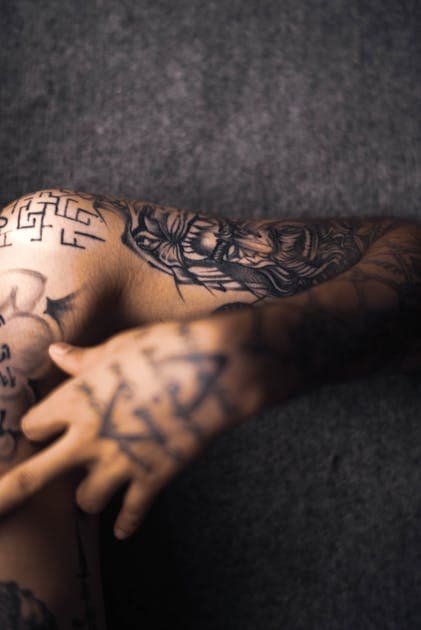
Cover Up Tattoo in Austin: Your Complete Guide
Three out of four people who regret a tattoo don't want it gone. They want it replaced with something better.
That's the part most people miss when they start searching for a cover up tattoo in Austin. You're not trying to erase your past. You're trying to upgrade it. And in a city with 50+ tattoo shops, finding the right artist and approach for a cover-up matters more than it does for a fresh piece on blank skin.
Here's the problem: most cover-ups fail because the artist tries to muscle through the old design with darker ink and bigger shapes. The result is a heavy, muddy tattoo that still shows traces of what you wanted to hide. But there's a better approach, one that combines laser fading with custom tattoo artistry to give you a result that looks like it was always there. This guide covers how that process works, what to expect, and where to find the best cover up tattoo artist in Austin.
Ready to explore your options? Book a free consultation at Pigment Tattoo and get a personalized assessment of your existing tattoo.
Why People Get Cover Up Tattoos in Austin
Tattoo regret doesn't discriminate. It hits first-timers and seasoned collectors alike. The reasons vary, but they're almost always personal.
Some people got inked at 18 and their taste evolved. Others went to the wrong artist and ended up with linework that wobbled or colors that faded to a greenish blur within two years. Relationship tattoos account for a surprising chunk of cover-up requests, too.
When Sarah Chen walked into Pigment Tattoo in 2024, she had a faded script tattoo on her forearm from a college relationship. "I'd been wearing long sleeves to work for three years," she said. The original piece was dark black ink, thick lettering, and positioned right where everyone could see it.
After two laser fading sessions with Certified Laser Technician Mondo Rivera and a custom botanical design by one of Pigment Tattoo's resident artists, she had a piece she rolls her sleeves up to show off.
The most common reasons people seek cover-ups include:
- Faded or blown-out tattoos from inexperienced artists
- Outgrown designs that no longer reflect who you are
- Name or relationship tattoos
- Poorly executed work with uneven lines or patchy color
- Tattoos that clash with a larger collection you're building
Whatever your reason, it's valid. No judgment here.
What Makes a Good Cover Up Tattoo
Not all cover-ups are created equal. A great cover-up does three things: it completely conceals the old tattoo, it stands on its own as a beautiful piece of art, and it ages well over time.
The biggest misconception? That you can just slap any design over an existing tattoo. Cover-ups require careful planning around the old design's size, color saturation, placement, and ink density. Dark, heavily saturated tattoos are harder to cover than light, faded ones.
A skilled cover up tattoo artist considers:
- Size: The new design needs to be larger than the original (about 30-50% bigger)
- Color theory: Certain colors hide others effectively; warm tones can mask cool ones
- Design elements: Organic shapes like florals, animals, and abstract work hide straight lines better than geometric patterns
- Placement strategy: Using the old tattoo's darkest areas as shadow points in the new design
This is where the science of cover-ups gets interesting. An artist who understands how ink layers interact with skin and existing pigment will produce results that look intentional rather than forced.
Laser Fading Before a Cover Up: The Advantage Nobody Talks About
Here's what separates a good cover-up from a great one: laser fading.
Most people think laser removal means erasing a tattoo completely. That takes 8-12 sessions and months of healing. But for cover-up purposes, you don't need full removal. You need strategic fading, and that changes everything.
Two to four laser fading sessions can lighten an old tattoo by 50-70%. That gives your cover up tattoo artist dramatically more freedom with the new design. Instead of being forced into dark, heavy imagery to mask the old ink, they can work with lighter colors, finer details, and designs you'd never be able to use on unfaded skin.
Think of it this way: covering a tattoo without fading is like painting over a dark wall with a light color. You'll need multiple coats and it still might show through. Fading the old tattoo first is like priming the wall. The new paint goes on clean and true.
At Pigment Tattoo, laser fading and custom tattooing happen under the same roof. That means Mondo Rivera, the studio's Certified Laser Technician, works directly with the tattoo artists to determine exactly how much fading each piece needs. No guesswork. No bouncing between a clinic and a tattoo shop with conflicting opinions.
Learn more about laser tattoo removal at Pigment Tattoo and how it pairs with cover-up work.
The Pigment Tattoo Advantage: Laser + Tattoo Under One Roof
Most tattoo shops in Austin don't offer laser removal. Most laser clinics don't employ tattoo artists. Pigment Tattoo is one of the only studios in the city that combines both services, and that combination produces results neither service could achieve alone.
Here's why that matters for your cover up tattoo in Austin:
Coordinated treatment plans. Mondo Rivera evaluates your existing tattoo with the specific cover-up in mind. He doesn't fade blindly; he targets the areas that need it most based on what the tattoo artist plans to create. This saves you sessions, time, and money.
The MD Pico Laser. This isn't the same technology your dermatologist used in 2015. The MD Pico laser shatters ink into smaller particles than traditional Q-switched lasers. That means fewer sessions, quicker fading, and less discomfort. It's safe for all skin types, which matters in a diverse city like Austin.
No communication gaps. When your laser technician and tattoo artist work in the same studio, they can look at your tattoo together, discuss strategy, and adjust the plan as fading progresses. At standalone laser clinics, the technician has no idea what the cover-up artist needs.
| Factor | Laser Clinic + Separate Tattoo Shop | Pigment Tattoo (All-in-One) |
|---|---|---|
| Treatment coordination | You relay info between providers | Artist and laser tech collaborate directly |
| Sessions needed | Often over-treated or under-treated | Precise fading based on cover-up design |
| Total timeline | 12-18 months typical | 6-12 months typical |
| Consultations | Two separate consultations | One consultation, one plan |
| Cost efficiency | Paying for unnecessary sessions | Targeted fading saves sessions |
Considering a cover-up? Schedule a free consultation to find out how many laser sessions you'd need before your cover-up.
The Cover Up Process: Step by Step
If you're searching for "tattoo cover up near me" and want to know what the process looks like at a studio that does it right, here's the breakdown.
Step 1: Free Consultation You'll meet with an artist and, if needed, with Mondo Rivera to assess your existing tattoo. They'll evaluate the ink density, color, age, and placement of your current piece and discuss what's possible.
Step 2: Laser Fading (If Recommended) Not every cover-up needs laser. If yours does, Mondo creates a targeted fading plan. Sessions are spaced 6-8 weeks apart to allow healing. The MD Pico laser works faster than older technology, so most cover-up prep requires just 2-4 sessions.
Step 3: Design Collaboration Once fading is complete (or if your tattoo is light enough to skip laser), your artist designs the cover-up. This is a collaborative process. You bring your ideas, and the artist crafts a design that works with your body, hides the old tattoo, and matches your vision.
Step 4: Tattooing Your artist executes the cover-up, often in one or two sessions depending on size and complexity. Because the old tattoo has been properly faded, the new design goes on cleaner with more vibrant color and finer detail.
Step 5: Healing and Follow-Up Standard aftercare applies. Your artist provides detailed instructions. Most cover-ups heal within 2-4 weeks, and you'll see the final result once swelling and peeling subside.
Marcus Delgado had a full-color sleeve on his left arm that he'd gotten over a series of sessions at three different shops. The styles clashed and the quality varied wildly. "It looked like a patchwork quilt, and not in a good way," he said.
After four laser fading sessions at Pigment Tattoo and a cohesive neotraditional redesign, his sleeve tells one continuous story. The process took eight months total, which is about half what it would have taken bouncing between separate providers.
What Can and Can't Be Covered
Let's be direct about limitations. While a skilled cover up tattoo artist can transform most tattoos, some factors make the job easier or harder.
Easier to cover:
- Small, faded tattoos with light ink
- Single-color black or gray pieces
- Tattoos more than 10 years old (ink naturally fades)
- Thin line work without heavy saturation
Harder to cover (but not impossible):
- Large, dark, heavily saturated pieces
- Tattoos with bright red, yellow, or white ink
- Recently done work (less than 2 years old)
- Tattoos on hands, fingers, or feet (thinner skin, more fading)
Where laser fading helps most:
- Dark, solid-fill tattoos that would otherwise require a massive, dark cover-up
- Multi-color pieces where specific colors need targeting
- Tattoos in visible locations where design options need to be broad
The truth is, almost anything can be covered with the right combination of laser fading and artistic skill. During your consultation, you'll get an honest assessment of what's possible and what approach will produce the best result.
Choosing the Right Cover Up Tattoo Artist in Austin
Not every tattoo artist is a good cover-up artist. Cover-ups demand a specific skill set that goes beyond standard tattooing.
When evaluating a cover up tattoo artist, look for:
- A dedicated cover-up portfolio. Don't just look at their regular work. Ask to see before-and-after photos of cover-ups specifically. The best artists document these transformations.
- Understanding of color theory. Cover-up work relies heavily on knowing how pigments interact. An artist who can explain why they're choosing certain colors for your piece is one who knows what they're doing.
- Willingness to recommend laser fading. An artist who says they can cover anything without laser isn't being honest with you. The best artists know when fading will produce a superior result and aren't afraid to say so.
- Experience and longevity. Cover-ups are high-stakes. You want someone with years of experience. Pigment Tattoo's resident artists bring 7 to 23 years of experience each, and the studio has been operating since 2009 with nearly 100 awards.
Browse artist portfolios at Pigment Tattoo to see cover-up work and find the style that fits your vision.
Austin has talented artists across the city. According to the American Academy of Dermatology, consulting with qualified professionals before any laser procedure is recommended. And the Texas Department of Licensing and Regulation oversees tattoo studio standards statewide, so verify your chosen studio's compliance.
The Fresh Start Program: Cover Ups That Change Lives
Some cover-ups carry more weight than others. Since 2014, Pigment Tattoo has partnered with a 501(c)(3) nonprofit to run the Fresh Start Program, offering free laser removal for people with gang, prison, or forced tattoos.
Demetrius Hale came to Pigment Tattoo in 2023 through Fresh Start. He had a gang-affiliated tattoo on his neck that he'd gotten at 16. At 28, it was the first thing every job interviewer noticed and the last thing they remembered. "I couldn't outrun who I used to be," he said.
Mondo Rivera provided free laser treatments through the program, and after six sessions, the tattoo had faded enough that Demetrius could move forward without that mark defining him. He didn't get a cover-up. He just wanted it gone.
The Fresh Start Program reflects Pigment Tattoo's belief that tattoos should be a choice, not a sentence. If you or someone you know is carrying ink from a past you're working to leave behind, reach out about the Fresh Start Program.
Your Cover Up Tattoo in Austin Starts Here
A cover-up tattoo isn't just about hiding old ink. It's about reclaiming that space on your body with something that represents who you are now. And the process you choose determines whether the result looks like a cover-up or looks like a piece of art that was always meant to be there.
The combination of advanced laser fading and custom tattoo artistry is what produces that second result. It's why Pigment Tattoo has built its reputation around offering both services in one studio, with a Certified Laser Technician and award-winning artists working together on every cover-up plan.
Consultations are free. There's no pressure and no commitment. You'll walk out knowing exactly what's possible for your tattoo, how many laser sessions you'd need (if any), and what the timeline and investment look like.
Book your free cover-up consultation at Pigment Tattoo today. Bring your tattoo. We'll bring the plan.